Saturday, May 21, 2016

Review of the Netflix series Zoo

Zoo, 13 forty-minute episodes CBS/Netflix, based on the novel by James Patterson and Michael Ledwidge

I'm posting this now because a second season of Zoo is due the summer of 2016

Confession one: I tend to harbor ill will towards what I perceive to be false advertisement. Even when the false perception was primarily my fault. I was hoping to see humans living hiding out from marauding wild-eyed vengeful lions. Therefore I had to shake off my annoyance that this book turned out to be more spy-medical-thriller than sci-fi.

Confession two: One of the effects of watching Korean dramas is that whenever I return to American storytelling tropes, I feel just a might underwhelmed.  So, yes: I had to get my mind sorted out.

The first thing I noticed was that Zoo presents viewers with a cosmopolitan multicultural world. I never know what to do with this sort of thing. Should I praise the writers for doing the quota thing? Or should I cringe because it’s so dang aggressive and yet --no matter how hard it tries-- it is so rooted in ya know...whiteness?

But -- my qualms and uneasiness aside-- let us move on: Meet Jackson Oz a (white) zoologist who lives in Botswana and is pretty chill. His best friend is a happy, philosophical, stocky (aren’t we all happy and philosophical, though?) African safari guide named Abraham. Not that we see a lot of friendshippy moments between these two but hey, the friendship is established. So the plot can move along. Jackson’s dad went mad while developing a radical-enough-to-knock-him-out-of-responsible-academia theory of animal uprising. “A manifesto, of sorts.” But, yeah, you know how it is with prophets -- or the prophetic trope: no one paid attention to him.

Then there is Jamie, a blogger with a passionate axe to grind against Big Food/Big Corporation Reiden Global. You know this kind of axe; if the sun doesn’t set, Jamie would find a way to blame Reiden Global. Then there are the mysterious Chloe and animal pathologist, Mitch. And a whole bunch of other people.

The plot begins when some lions escape from the Los Angeles zoo and go on a murder spree. Wouldn’t you know? Some African lions are doing the same thing. Then there are missing cats in LA, dogs, rats, and birds. Ah, yes, birds. See, this brings me back to where this drama lost me. I was hoping something more was going on. Ya know...like a natural “reset.” Heck, I’ll say it. I was hoping for a kind of Walking Dead with zombies replaced by animals. But no, this epidemic is man-made and greed-caused. Which is cool, I guess. After all, that’s how many zombie apocalypses begin. But my heart sank when the hordes of terrified fleeing humans didn’t really materialize and the story took a detour into medical investigation.

Something else bothered me. The tropes. Tropes galore. The story felt like screenwriting by the American cultural book. There are gun-toting rednecks, Black men who will say wise insightful philosophical paternal stuff one minute then make piropos at non-Black women the next, a young scientific-minded African boy, a possibly-shifty FBI operative, a sick dying little girl who speaks like no real sick girl but like all the sick dying kids ever in Hollywood movies, a gang, a Charles Manson type (complete with southern accent and Bible), a rich Asian safari-hunter and many others. The drama had a kitchen sink feel and if the writers hadn’t aimed to shoehorn all these tropes/beats into one story, I would’ve been more interested. But in their rush to hit all the templates, none of these sub-plots touched the heart.  

Okay, so did I like it? Once you accept the tropes, the rushing about from country to country, the convenient-to-the-point-of-ridiculousness-plot, the iffy CGI, and the dang slow mystery, it’s really an okay show. Writers will be ticked off by the stereotypical beats, even more stereotypical people, and cringey dialog but kids and non-writers might like it. It’s pretty safe. No major sex scenes. I will also say that James Wolk, who plays Jackson Oz is seriously hot and boy-next-door hotness does wonders to keep this female viewer watching even after she realizes a story isn’t going the way she wants it. So yeah, good for teens who like medical thrillers. And hey --a multicultural cast and a Black person helping to save the world. Aggressive multiculturalism covers a multitude of bad plotting.

Sunday, May 01, 2016

Review: Shatterworld by Lelia Rose Foreman


This is the first Christian fiction book I’ve read in ages; the first I’ve really actually liked, and the first where I’m actually tempted to read the sequels to. This surprises the heck out of me, because usually I find reading contemporary Christian fiction (and non-fiction for that matter) a hard row to hoe. Christian though I am, whenever I read Christian books, I usually peeve, complain, and quarrel with every other sentence.

That’s not to say I didn’t find myself groaning a few times, because seriously, reading Christian fiction requires a certain mindset, especially because the rules for Christian fiction are a little different than the rules for general fiction. But even then, Lelia Rose Foreman plays with those rules quite well and also quite humourously.

Shatterworld is primarily a young adult book. Therefore it has all the required tropes such as teenaged rebellion, generational gap issues, preachy parents who –because they don’t want to upset their kids-- aren’t telling their kids the “entire” family story.

But Shatterworld is also speculative fiction, and this is where it excels an even surpasses most Christian speculative fiction. The novel recounts the voyage of the Star Flower and its settling of New Earth by spiritual pilgrims who fled their oppressive country. The comparisons between the settling of the Americas and the settling of New Earth goes even further. But, there are subtle differences. For instance, the star-traveling pilgrims are very respectful of the aboriginal sea-dwelling hexacrab natives of New Earth. They struggle to understand each other’s phyla/species/order/kingdom and grow to understand each other’s linguistics, culture, history, and fears. Our Pilgrims are very careful about bringing theology into their conversation and so far – the book is part of a trilogy—have not set about attempt to save any hexacrab souls. The settlers are respectful and as curious about hexacrab history as the hexacrab are. There is no notion that the hexacrabs are the Hivites/Perrizites/Jebusites etc who must be overthrown in order for God’s people to have their manifest destiny. There is sharing of resources and goodwill between the pioneers and the hexacrabs who are seen as perhaps members of The Creator’s Other Folds.

At least that’s what it seems like so far. The new settlers are of all races – a multicultural Christian community a bit like the Amish or Mennonites,  so they are respectful of sentient life wherever they find it and however it has evolved or been created by the Creator. It’s a rigid, (some might say over-disciplined) community. And perhaps they had to be all those years of warp travel, but some youngsters-- like Rejoice, our main protagonist—chafes under it. There is the basic truth that they have to farm and terraform the new world, but there is also the age-old rural vs urban /agrarian vs industry /utilitarian vs heart’s desire issues.    Rejoice wants to be an astronomer but, like every other Christian teen, has more than her share of rules to obey and has to endure parental spiritual speeches all meant to challenge what they believe is her selfishness.

So I liked this book a lot and I’m even interested in discovering more of this community, and learning more about hexacrab communities, and wondering how the two worlds will grow together. I also liked the “puritanical” names. Very funny.

As for what I don’t like: The book is a bit light on description. I would’ve loved to see the world better.  There are many characters and many times there are scenes where the author throws many characters at the reader so that we can get the communal overview. But still, there could’ve been a less crowded way of doing that. In the end, many secondary characters are reduced to their job description or their personality. It makes the book read faster because we know what each character is like. But still. Certain sections feel rushed: The growth of the friendship between the hexacrabs and the humans. The ending  of the book. But all in all, it was a fun quick read.

The book comes with a study guide at the end.

I received this book free of charge in exchange for a fair and honest review.

Monday, April 11, 2016

Review: The Whole Coconut Cookbook

The Whole Coconut Cookbook
by Nathalie Fraise
  • Hardcover: 128 pages
  • Publisher: Ten Speed Press (January 26, 2016)
  • Language: English
  • ISBN-10: 1607748053
  • ISBN-13: 978-1607748052
Since I started trying to be gluten-free, I've been experimenting with chickpea flour and coconut flour. Plus I can't really drink milk either. Plus coconut oil is good for massages. Plus I'm Jamaican. So all this comes together to make me want to reacquaint myself with coconut again.

Hence this book. It's one of a few coconut cookbooks out there so it looks as if coconuts are making a comeback. The good thing about the coconut is that it can be used in many forms; the other good thing is that it's a staple of many cultures. So it's in different kinds of cuisines: Thai, West Indian, etc.

So: the good thing about this book: the recipes are easy and healthy.

The good (but also possibly bad) thing about this book is that it's made for a foodie generation. I was hoping for a lot of  Southeastern, African, West Indian, etc dishes. No such luck. The recipes here are the kind of recipes one would find in a healthfood store. Tasty but healthy and seemingly created by the author or  I guess that's okay because Americanized taste buds may not connect to anything too exotic-tasting or too full of fat, meat, wheat etc. So that's good.

Coconuts, in all their forms, are present in all the dishes...whether it's flour, sugar, "aminos," milk, vinegar, kefir, water, nectar. Sometimes the coconut is a large portion of the meal, sometimes it is merely present as coconut milk or coconut oil (which might feel like a bit of a cheat but I guess the taste of coconut does go a long way.) The chard chip recipe, for instance, consists of chard, sea salt, and coconut oil.

The book's chapters consist of the following:
Introduction
A guide to coconut ingredients
Cooking with coconut
Breakfast dishes
Main Courses (which includes mostly vegetarian dishes)
Salads and sides
Snacks
Drinks
Desserts
Resources
Acknowledgments
About the Author
Index.

It's a small book and for those who generally don't eat coconut or veggie meals, this is a good introduction. It's a good-enough book, I think. Not bad, but not great.

I received this book free in exchange for a fair and honest review.


Saturday, March 12, 2016

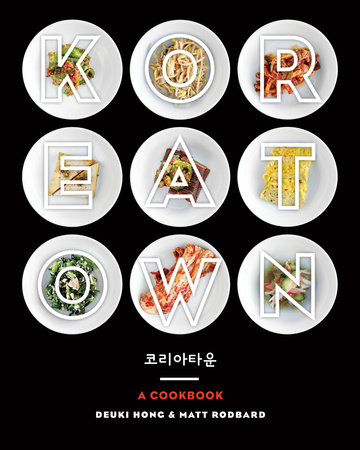
Review: Koreatown: A Cookbook

Koreatown: A Cookbook


Hardcover
Published by Clarkson Potter
Feb 16, 2016 | 272 Pages | 8 x 10 | ISBN 9780804186131


I love this book! This is yet another recipe book that I will actually use.

Unlike most recipe books, this recipe has little anecdotes about how and why certain (famous) folks became Korean food-lovers Which is odd, right? Most recipe books don't deal with the cachet of why the author is doing a book on ethnic cuisine. I guess part of the reason is because the book is also trying to show the culture of Korea and Korean foods in addition to give us the recipes.

The authors are a chef of a famous Korea restaurant and a food writer who has lots of food cred. So yeah, this is not just a regular recipe book. There's a lot of fame, style, cred, "hauteness" ;-) in this book.

The book  is divided into the following chapters:
Introduction
Ingredients & Equipment
Kimchi & Banchan
Rice, Noodles & Dumplings
Barbecue: Grilled, Smoked & Fired
Drinking Food: Pojangmacha
Soups, Stews & Braises
Respect: Guest Recipes
Drinks
Sweets & Desserts
Acknowledgments
Index

As in all good books on ethnic cuisine, one learns a lot about the culture's cooking style, food, and people. And of course one learns a lot about many Koreatowns across the nation.

There are full-colored pictures of the dishes and of food-workers and food eaters and drawings of the guests whose anecdotal histories with food are included. I'll say that the important people who are included to tell us about their love of Korean food was a bit off-putting. This book is great without famous people telling us about themselves. But some readers might like that. And mercifully these folks -- food critics, actors, etc-- don't take up more than two pages each.

The photos are amazing. The description of each recipe and the layout of each recipe is accessible and helpful to all readers.

Highly recommended.

I received this book free of charge in exchange for a fair and honest review.

Thursday, February 11, 2016

CURE: A Journey into the Science of Mind Over Body

CURE: A Journey into the Science of Mind Over Body by Jo Marchant.

  • Hardcover: 320 pages
  • Publisher: Crown; 1 edition (January 19, 2016)
  • Language: English
  • ISBN-10: 0385348150
  • ISBN-13: 978-0385348157

  • I set out to read this book with an open mind. Actually, I was very happy to read it because since I battle certain so-called incurable illnesses and since my son is diagnosed as being on the autism spectrum I figured I would read a book to give me faith in the human body and spirit. And hey, it’d be a scientific book so that would be better!

    But the book pretty quickly got on my last nerves. First there was the introduction where she pretty much disses anything (and anyone) who might be “unscientific.” It wasn’t even her idea about homeopathy, which really to me is pretty much the precursor of vaccines. They both deal with something being diluted and “like curing like,” after all? It was her insistence on how science validates the flaky stuff New Ager types have been saying. Yes, I thought to myself (although I’m not a New Ager), here we are dealing with someone who looks down on any kind of knowledge or tradition which isn’t rooted in the Western Scientific medical tradition. Nevertheless, I soldiered on. Cause I want to believe, and all that. After all, the book is written by a science journalist who was going to –in a small way—affirm some of the stuff flakes like me believe. She was, after all, on our side. Kinda.

    So the first chapter: Marchant discusses the secretin trials and how it had seemed as if secretin would be a cure for autism because a young boy suddenly improved. But then in subsequent trials – between secretin and a saline solution—it was shown that people of both the secretin group and the saline group had some improvements. Hence, she hints, there is a placebo effect. (The first chapter is called “Faking it” by the way.)

    While I do believe in the so-called “placebo effect,” I really had to groan at this particular scientific methodology of supporting the mind over matter placebo effect. Why? Because from the first chapter I began to see the narrow-mindedness of the scientific mind. I expected Marchant to discuss other trials that did not include the saline solution. Why? Because perhaps saline is not really a placebo. And in a science trial –or a book about a scientific trial--, shouldn’t a scientist or writer step back to see if an assumption is being made. But that is the point, the scientific mind doesn’t realize its assumptions. An example, there are countless studies and papers detailing the fact that people on the autism spectrum are often dehydrated, and often their mothers were dehydrated during their pregnancy. Shouldn’t a science writer be aware of this and include a chapter to help build her case? In addition, what happens to people who go to hospitals? They are usually put on a saline drip? There are scientific reasons for that. And in hospitals in Asia, going to the hospital to get hydrated is common. Doesn’t this science reporter know this? Shouldn’t a writer know how to build her case for science?

    And that was just the FIRST three pages of the first chapter. This kind of thing goes on throughout the book! If one has eyes to see it, one can see clearly how scientific types don’t seem to understand their assumptions.

    Once one accepts that the trials Marchant espouses often miss out on some  aspect because the scientists and scientific journalists don’t even see, then reading the book becomes a kind of perverse search for What Is Missing. I swear! It was just plain infuriating.

    And i did laugh when I read on page 212: "Carol feels that the doctors ignored factors such as her caffeine addiction and how anxious the tests were making her." Cosmic moment: Because I (Carole) had been spending the book thinking, "These scientists and their trials are ignoring factors." I love serendipity and weirdness like that.

    I’m not saying this book is bad. It’s actually quite good in some places. The “Looking for God” chapter was quite good, for instance. It wasn’t as sneery as I expected it to be. But for those who already believe in the power of the mind this book is old news. Buy this book as yet another book to put beside all those other self-help health books that encourage and inspire you. Or buy it for someone who thinks he’s scientific who won’t see through ignored factors (the assumptions and unexplored holes) in these examples and trials.  I suppose I should recommend this book. It’s flimsy, definitely (or perhaps it is only the scientific methodology of scientific trials that are flimsy) because it says nothing new. But it might be able to help those who are afflicted with stress-related illnesses, or illnesses rising from the feeling of being unloved.

    Of course, religion has already told us all that.
    Keep your heart with all vigilance, for from it flow the springs of life. Proverbs 4:23

    Jesus did say:
    But the things that proceed out of the mouth come from the heart, and those defile the man. For out of the heart come evil thoughts, murders, adulteries, fornications, thefts, false witness, slanders. -- Matthew 15:18-19

    I received this book for free in exchange for a fair and honest review.

    Saturday, January 30, 2016

    Film Review: 11 am


    11 a.m. South Korea 2013 CJ entertainment. Written by Lee Seung-hwan. Directed by Kim Hyun-Seok.

    It’s no secret that I am a lover of time travel movies. After dwindling down the choices from the many time travel flicks I’ve seen this month, the remaining contenders were Time Lapse and 11 a.m. So, the first: 11 a.m. because I like Korean (and non-US) speculative fiction.

    The story is pretty basic. Our hero Woo-seok is leading a time travel research project called Trotsky -- so named because it concerns the past and alternate timelines and because Trotsky would’ve been the great Soviet leader instead of Stalin had if time had turned out differently. I need not tell you that Team Leader  Woo-seok has a past he wants to change, do I? We pretty much know that all Mad Scientists have some horrible event that happened in the past from which their passion came. So, yes, this passion for time travel originated in the death of our hero’s beloved wife. Ah, if he could only go back in time and fix things.

    But her death happened waaaaaaaay back when. And so far the Trotsky team have only been able to (theoretically) go back in time for 24 hours. Not a bad start! But apparently not good enough for the Russians who have been backing this project and who now are on the verge of shutting it down.

    Disappointed but valiant --and (as I’ve already stated) led by a somewhat obsessed Team Leader, our scientists decide to try to send Trotsky into the future. “For real, this time.” No more theories or transporting non-humans into the future. Woo-seok and Young-eun are sent a day ahead. At exactly 11: a.m. But when they arrive there, they find much amiss. The station’s ablaze, some crazy guy is attempting to murder Woo-seok folks have died, the CCTV tapes are scrambled and the walls are crumbling.  Dear me! What do these things mean? How did matters come to this pass? Have the Russians been doing shady things? Or has knowing the future caused this bad future to happen?

    This is a fun flick. It’s fast-paced and it comes together well. I didn’t find any plot holes -- which is what one looks for in time travel flicks-- but it’s possible I was so caught up in the story I missed them. This film is streaming on the web.

    Time Lapse 104 minutes  USA 2014  Written by Bradley D King and BP Cooper. Veritas Production

    Time Lapse is not exactly a time travel pic. It’s more of a fortune-telling advanced infomation pic. And it turns out to be the perfect complement to our Korean time travel piece, 11 a.m. We have three best buds -- consisting of Callie, Finn, and Jasper. Finn and Callie are dating and Jasper is well, hovering around them as best friends who are in love with their friend’s girl often do.

    A neighbor goes missing. In their search for him, they discover a camera that takes pictures of coming events. Exactly 24 hours in the future. Dear me! What a difference a day makes! Well, for one, it can make a difference between winning a lot of money on gambling and winning a little. It can prevent -- or cause?-- murders. And if one or two of the main characters are obsessed with greed or lust or passion, well, who knows what will happen?

    The funny thing about the course of events is that yet again knowing the future creates the future. In 11 a.m., the characters try to fight against what seems inevitable. In Time Lapse, the hipster ever-so-sure-of-themselves friends believe that since a future scene appears in a photograph, they are obligated to recreate what they see in the picture. But like the scrambled CCTV tapes in 11 a.m., these folks are working with incomplete information. I definitely recommend this movie. This film is available on DVD and is streaming online and on Netflix.


    Friday, January 15, 2016

    Review: Art Students League of New York on Painting

     Art Students League of New York on Painting
    Lessons and Meditations on Mediums, Styles, and Methods
    James L. McElhinney and the Instructors of The Art Students League of New York.
    • Hardcover: 304 pages
    • Publisher: Watson-Guptill (November 10, 2015)
    • Language: English
    • ISBN-10: 0385345437
    • ISBN-13: 978-0385345439

    Back in the day, I used to paint. And play the violin. And play the piano. And do calligraphy. But I've kinda let those arts and crafts fall to the side as I focused on my writing and my fabric designs. But this book is seriously inspiring.

    If you've seen art books, they tend to fall into the following categories: art how to's, art history, art culture, memoirs by art professionals. This book is a little of all those categories. First of all, it's a book with really great paintings. In this day of photoshop and illustrator, one generally doesn't see acrylic, oil, etc paintings unless one visits galleries and museums. And realistic paintings are often done by cameras. This book reminds the reader of the craft of painting. Simply speaking, it's not a book that one has to read. But I would recommend reading it.

    Cause these artists have some important stuff they want to say.

    I've run into this before where people have been resentful because of the way critics and teachers of modern art have derided realism as passe and unimportant. So yeah, there is a whole lot of that. But hey, they're telling the truth and they're speaking their art. With the advent of people like Lucien Freud and Philip Pearlstein and others, realism with an emphasis on figure realism has come back into vogue in many quarters of critical opinion.

    The commentary and personal histories of the artists will definitely help many modern artists understand the paths and pitfalls of the art life and will also give information on the state of contemporary realistic painting to future artists. This is a great book to give to any artist interested in realistic painting. I will add though that there are a lot of nude paintings. I don't really mind it. (I was a model for painters in college but I was one of those models who never removed her clothing. Imagine then me being dressed and my partner being fully nude! Ah, those days!) But some folks who have a problem with seeing the nude human body --even in a painting-- might be perturbed.

    Founded in 1875, the venerable Art Students League of New York still instructs some 2500 students each month. In this copiously illustrated  book on painting, we get an in-depth look into the methods and inspirations of contemporary artists teaching at the League. The book is divided into three parts: Lessons and Demos, Advice and Philosophies, and Interviews. Some of the artists  in Part One include Henry Finkelstein (On Painting, with a Critique); Thomas Torak (A Contemporary Approach to Classical Painting); Naomi Campbell (Working Large in Watercolor); and Costa Vavagiakis (The Evolution of a Concept).
     
        Part Two features, among others, William Scharf (Knowing that Miracles Happen), Peter Homitzky (inventing from Observation), and Deborah Winiarski (Painting and Encaustic).
        Part Three features three interviews: Frank O'Cain (Abstraction from Nature); Ronnie Landfield (On Learning and Teaching); Knox Martin (Learning From Old  and Modern Masters).
     
        Most of the art is representational, with emphasis on the human figure. After every chapter there is a student gallery which reproduces recent paintings from the students.
        There are lots of good tips in the illustrated demos that would profit an  experienced artist as well as the beginner. I received this book free of charge in exchange for a honest review.


    Thursday, January 07, 2016

    Review: Money-Making Mom by Crystal Paine

    Money-Making Mom How Every Woman Can Earn More and Make a Difference

    By Crystal Paine

    • Hardcover: 240 pages
    • Publisher: Thomas Nelson (November 3, 2015)
    • Language: English
    • ISBN-10: 1400206480
    • ISBN-13: 978-1400206483
    Okay, I'll admit it. I was prepared to hate this book. I assumed it was a get-rich-quick kind of book written by some happy peppy mom which promised happiness and wealth for anyone prepared to work hard. It's kinda like that but not really.

    As a writer I read a lot of blogs and books about how to make a living as a writer. Because... let's face it, the internet has opened up and anyone can use his or her talents to make a little cash. And writers aim to make more than a little cash: writing is a bit like a mom-and-pop store nowadays. It is a lifestyle, a commitment, a vocation to bring goods to others, and a means of helping to make ends meet.

    Like other books that promise advice on success, it must be read and applied. There is no real good to reading a book like this -- a book crammed with insights such as finding your talents, marketing yourself, building your business, budgeting one's time, money, and affections-- without actually committing to act on the advice.

    And this is where the book excels. Crystal Paine gives solid advice. It's not hype and it's not superior. It's like a good friend sitting you down and telling you what she has had to do in order to make her own life successful. She's spiritual too and believes in giving back, which isn't a bad thing.

    Now, the reader of this book (writer, artist, typist, butcher, musician, baker, candlestick-maker) might not become as successful as Crystal Paine is but I suspect that any woman (or man) who reads and diligently applies the suggestions in this book could definitely find a way to create extra bucks for their family's income.

    I received this book free of charge in exchange for a fair and honest review.

    Saturday, December 26, 2015

    Film Review: The Beauty Inside

    The Beauty Inside 2015 South Korea. Yang Film. Directed by Baek Jong-yeol

    What a Difference a Day Makes! But this movie involves not time, not space, but the human body and it has the feel of a transgressive fairy tale. Or perhaps it would be more transgressive if it hadn’t played it so safe. I will say though that some folks --especially those who are uncomfortable with non-normative sexual relationships-- might not find it such a safe watch. (This film is based on the original Intel and Toshiba “social” film, which I have not seen so alas, no way for me to compare.)

    On his eighteenth birthday, Woo-Jin discovers that he is a monster. He wakes to find that he is not himself. Not externally anyway. He soon realizes that it is his fate to look differently everyday. He wakes not knowing what sex, race, or age he will be. The only way he can keep any one face is to not go to sleep. But sooner or later sleep overtakes him and he awakes to a new self. One can imagine that this could be a problem. He lives an isolated life as a furniture maker with only his mother and his best friend privy to his secret.

    Then one day he falls in love.  At first he is content to simply visit Yi Soo, the object of his affection everyday. Since he looks like a different person, he can just pretend to be a customer. But after a while, he decides to show her who he is. After the initial shock -- and worry that she is dealing with a nutcase--  Yi Soo accepts him. But this acceptance takes a toll on her mental health and on her reputation. After all, her co-workers think of her as a man who sees a different man every day. And the poor girl only knows who her boyfriend is when he takes her hand in the morning or when he emails a photo of himself in the morning.  We come to understand that although human love is based on the beauty inside, there is comfort in the routine of seeing the same person’s face everyday.

    So then, the safety and discomfort factor. True, there are scenes where we see two girls lying in a bed caressing each other’s faces but that’s pretty much it. Not that I wanted a full-on gay sex scene but if the filmmakers are going to  challenge society, they really should step up and make some of us conservative folks in the audience cringe or cover our eyes. But perhaps some conservative folks in Korea had that reaction. It would’ve been neat too to have an interracial kiss on one of the days when our hero is a Black person. Heck, I wouldn’t have minded a scene showing him as a Black person walking around town.  But the biggest problem in this incredibly sweet and wonderful angsty movie is how incredibly sweet and wonderful and angsty it is. And you know what that means, don’t you? While there are the occasional ugly, old, plain, middle-aged folks thrown in as our main lead, the guys who play our heroes are all incredibly hot and gorgeous. Korea’s culture of beauty obsession is not challenged at all. So, how can one dislike a movie when all of one’s favorite Korean stars are in it? Highly recommended. I suppose the film does say something about love and appearances. I just don’t know what. But it is beautiful and touching to watch.  This film is showing in art theaters.

    Wednesday, November 25, 2015

    Film Review: End of Animal or The Apocalypse Comes to the Korean Countryside


    Director and Writer: Sung-hee Jo   

    2010

    Korea 

    There are so many American evangelical Christian movies out nowadays. Movies such as War Room, for instance. On the whole, these films are generally only received well by Christians...primarily because American evangelical Christian filmmaking is so bad. Notice, I keep saying "American evangelical Christian." And the reason I am so specific is because non-American evangelical films are generally rather good. And American Christian non-evangelical films are also generally good. (See "The Mission," for example.) There have, of course, been a few good evangelical Christian movies. The Apostle, for instance. But in all honesty, evangelical Christian movies made by Americans are usually pretty bad.

    One of the reasons why Evangelical America Christian movies are so terrible is that they are so finely-woven together with American culture, American filmmaking, and American Church tradition. American culture has certain racial and social ideas that have seeped into American Christianity. American filmmaking aims for blockbusters; thus American Christian movies tend to be large-scale affairs rather than indies. And American Church tradition is illustrative, preachy, expository, combative, and informed by such siege mentality that it often feels the movie is all too aware of possible enemies/unsaved folks/detractors in the audience. Because of this debate mentality, many Christian movies are not about characters but they often seem to be about polemics and doctrinal points.

    Given all that, it's always refreshing to see Christian films that are simple stories. It's refreshing when the films are plain old stories but it's downright exhilarating when a Christian filmmaker tackles Christian doctrine...in a perfectly cinematic way. 

    End of Animal, which is streaming online in various places, is an apocalyptic film that is a far cry from the likes of would-be blockbuster Left Behind. The story begins with a cab ride. Our heroine, Soo Young, is heavily pregnant and is pretty much due any minute. Because of this, she is driving to her mother's house where her mother will take care of her before, during, and after the birth. The cabbie is a friendly older guy. But a stranger soon joins the group in the cab. He's wearing a hood, and a baseball cap and he knows way too much about the lives of the two people he's traveling with. He also knows the world will be ending soon. Is he an angel? God? Or "an angel of the Lord" (an angel who pretty much is so full of God that the angel is almost a walking manifestation of God.)?

    Well, the angel starts telling them all will go black within a few seconds and gives them some advice. Even after the blackout occurs, electricity stops, and good folks disappear off the face of the earth, he keeps giving advice to our heroine. Via a walkie-talkie or by other means (dreams, notes, words spoken off the cuff by casual strangers, etc.)  Note, I said "advice." Because one cannot really call the words "commands." This being is protective, testy when not listened to, omniscient, but by no means a "bully."

    This is one of the first areas where this movie differs from American movies. In an American Christian movie, we would have been given a long dissertation on who this being is and why He is being this way, complete with chapter and verse. There is no such exposition in this movie. Korean filmmakers are notorious at trusting their audiences. American filmmakers are equally notorious for introducing characters, showing their character traits, and generally not trusting their audiences to figure stuff out.

    I said earlier that this being is testy. And really, after watching Soo-Young repeatedly follow her own logic, disobey intuition, disobey clear commands, and get into deeper and deeper more harrowing circumstances, the viewer understands why this unknown protector of hers gets annoyed. Like Israel of old, and like Christendom now, Soo-Young is willful, stiff-necked, and self-trusting to an inordinate way too logical degree. Like the poor man beaten on the road in the parable of the Good Samaritan, she has traveled a road and has been beaten. But unlike the beaten man, she continually refuses the help provided by the Good Samaritan.

    We the viewers consider her a "good" character because she is clearly a decent person. But she is not an obedient character. We consider her a character whom another character loves and wants to save. But at the end, one wonders if this woman is beyond salvation. And with the film's devastating last lines of dialog, one understands the exasperation of God.

    There is one character who is reminiscient of the malefactor on the cross and it's a bit jarring to see his redemption. But, if one is a viewer of Korean dramas and movies, one has come to understand the almost-ubiquitous redemption arc.

    The other thematic layer is social and historical. Our heroine has suffered in much the same way that modern Korea (or even modern African-American) culture has. Does she come out of her suffering with any sense of gratitude? No, she repairs her woundedness with the desire for stuff.

    If this movie had been made in the USA, the bad guy would have been killed and our heroine would have seen the light.

    This movie is not to everyone's taste. If you aren't a religious person, avoid it. But if you like scifi apocalyptical films, films about the spiritual nature of human beings, and Christian films that are a notch above the rest, this film is Highly Recommended.

    Friday, November 13, 2015

    Review: The Time Garden by Daria Song


    The Time Garden: A Magical Journey and Coloring Book (Time Series)

  • 80 pages
  • Watson-Guptill; Clr edition (September 1, 2015)

  • ISBN-13: 978-1607749608

  • $8.79

    I recently reviewed the second book in this series, the Time Chamber and I liked it a lot. But now that I've seen the first book, I think the second pales in comparison. It pales because the first is so rich.

    The Time Garden is essentially a coloring book with a story thrown in to frame the pictures. The typefont for the story is pretty small for a kid's book -- and yes, although this is supposed to be an adult coloring book, I definitely think it'll probably be bought for kids. The vocabulary in which the story is told is a bit unwieldy for a kid but it's perfect for adults. The story itself is good for kids but there is no resonance for adults. It would've been good if there could be a story that really does connect symbolically to the adult mind. But, maybe I'm nit-picking. The book is after all, primarily, a coloring book.

    Which brings me to why I like this book so much better than the first. The pictures here are just more complicated period. There are lots of nooks, crannies, patterns, geometric, man-made, and natural shapes in the world. Birds and flowers are on one page while axles or buildings or gears or balloons are on the next. Although it is not fantastical in the sense of fantasy, it does present the world in a way that enables the viewer to see how beautiful and eerie the world can seem if one only looks. It's fun. More aimed for girls but boys might like them. Because some of the drawings are so complicated and the coloring space so small, I wouldn't recommend this book for children who don't know how to color within the lines.

    The pages have so far been able to withstand magic markers but because the pictures are on both sides of the page, i would be careful with the kind of media one uses. Crayon, colored pencils seem best.

    Very recommended for adults and kids who like coloring.


    Saturday, October 17, 2015

    The Time Chamber by Daria Song


    The Time Chamber
    by Daria Song
    WatsonGuptill;
    Clr edition
    (October 13, 2015)
    ISBN 9781607749615
    80 pages
    9 13/16" x 9 13/16”
    I haven’t seen any adults coloring any books but supposedly there’s an adult coloring book
    craze. Who knew? So when I got the opportunity to review one of them, I grabbed it. The fact
    that the book features a world perfect for fantasylovers
    who yearn for sensawonda helped too.
    Unlike, say, illustration books where the colors are chosen by the creator of the book, what
    makes coloring books so good is that there’s a collaboration between the original artist and
    countless colorers around the world. Coloring book artistry is a skill that requires generosity and
    patternmaking
    as they guide strangers through their created world.
    So, the book. There is a story as well. A little fairy who lives inside a cuckoo clock is bored with
    her world and decides to visit the human world. The sights the reader/cocreator
    sees are tiny
    because they are seen through the POV of a tiny fairy. Aspects of the human world would seem
    magical to any stranger, but imagine a tiny creature from another world viewing our human
    world at night. This is what is so lovely. Our world is full of so many patterns which we barely
    notice. The practical created arts of a utensil set or of keys or the haphazard patterns of books
    on a bookshelf are what brings delight to our lives. I remember sitting in a dentist chair once and
    noticing how the horizontal slats of the window blinds fell against the window sills and how the
    light reflected diagonally on the medicine drawer. I’m sure it made me smile. The world is full of
    design, color, and patterns we hardly notice unless a child or a fairy brings them to our attention.
    Then suddenly the designs on crockery, the parallels of the rise and goings of a staircase, or
    even the face of a clock will give us pause. Art and the POV of children truly adds beauty and
    magic to our world.
    This is the sequel to an earlier work which showed the fairy’s world. That was probably lovely as
    well. The book is printed on both sides of the paper. That means that one should warn one’s
    child to be careful about what media they use. Recommended for kids and adults who like to
    color.
    Happy creativity

    Thursday, October 15, 2015

    Review: NLRV Giant Print Holy Bible

    NLRV Giant Print Holy Bible
    • Age Range: 8 and up
    • Hardcover: 2368 pages
    • Publisher: Zondervan (October 6, 2015)
    • Language: English
    • ISBN-10: 0310751209
    • ISBN-13: 978-0310751205


    When I read that this was a Giant Print Bible, I was suspicious. Giant Print Bibles are either very, very large and unwieldy -- often coming in two different books-- or the print isn't "giant" at all. But when the Bible arrived, I really liked it. This Bible actually works. It is giant-print and it's in a handy-sized book.

    Another great thing about it is that it's the Bible and little else. There is a small dictionary and a list of 150 famous Bible stories at the back --and a table of contents and a tiny introduction in the front. But other than that it is the Bible without all that pesky "study" that makes Bibles unwieldy or that tells us what to think. The margins are somewhat small so not a lot of room for notetaking -- although one can still take notes. The Bible is told in single column format so the reader will have to get used to reading across the width of the page without wandering into other lines. I would've wanted spaces between each paragraphs but that would probably add more pages. So this Bible works. There are chapters headings and sub-headings within chapters. The typefont is dark and heavy which is good but that sometimes means one can see through the paper to the preceding or the following pages. It's hardcover and solid without feeling ultra-heavy.

    This is the kind of Bible that is good for small kids whose eyes have not gotten used to small print or to people with sight issues or eye problems. I was going to give this Bible to a church, which is what I generally do with Bibles after I review them, but I think I'll give this to hubby. He got this great big smile on his face when he opened it to read it.

    I was given this Bible free in exchange for a fair and honest review.
     

    Friday, October 02, 2015

    Review: The Surprising Imagination of C S Lewis -- An Introdution

    The Surprising Imagination of C S Lewis -- An Introduction
    Jerry Root and Mark Neal
    Abingdon Press
    www.abingdonpress.com


    Have you ever had one of those moments when the perfect book falls into your hands at the perfect time? There I was writing a new story and in a bit of quandary about what direction my imagination in the story would take.


    Knowledge of Lewis writings would make this book an even better read but it is not required because the editors/writers have written a book that is an “introduction” to Lewis’ philosophy of the imagination and to his writings.  


    It seems --according to the editors-- Lewis has written about the senses and types of imagination. The three senses of imagination are as follows: the first is wish-fulfillment fantasy which is self-referential and narcissistic and imagines the dreamer as the hero. The second sense is invention in which the creative power of the human mind crafts images and depictions to explore, grasp, and understand the world as it is. The third sense is the imagination that helps us to understand what is beyond our understanding and experience horizons that are beyond our experiences.


    The types of imagination include: the baptized imagination which is the imagination regenerated which is an awakening and longing for the numinous, and a waking to the grief of the world. The penetrating imagination is imagination that helps in getting deeper knowledge of a kind of reality. There is also the material imagination, the generous imagination, the primary imagination, the transforming imagination, the controlled imagination, the satisfied imagination, the awakened imagination, the absorbing imagination, the shared imagination, the compelled imagination, and the realizing imagination. I think those are all of them. The editors use different works by Lewis to show how these different kinds of imagination are at work in literature, art, spirit, theology, creativity, self-knowledge, and reality.


    C S Lewis is a Christian writer who, along with other Christian writers such as George MacDonald and J R R Tolkein-- has influenced much of modern fantasy. I suspect many readers will not want to read this book because they fear they might be overwhelmed with silly Christian nonsense. But trust me on this, unless an atheist writer has a major grudge against an old evangelical aunt, he/she should find this book very enlightening. And certainly those who want to depict the religious mind properly, without spite or injustice, would do well to read a book like this.  

    I really want to do this book justice because it is that good! Maybe I just love having my heart opened to how the creative heart opens. The last book that had such an effect on me was Mastermind: How to think like Sherlock Holmes by Maria Konnikova and that was a book that used Arthur Conan Doyle to show how memory, neuroscience, and literature works. This book brought back my joyful love of literary criticism and reminded me again why my favorite genre to read and to study is review/criticism. Truly, reading this book caused me to be Surprised by Joy.

    Thursday, September 17, 2015

    Review: Two Days, One Night


    Country: Belgium
    Language: French | Arabic | English
    Release Date: 21 May 2014
    Directors: Jean-Pierre Dardenne, Luc Dardenne
    Writers: Jean-Pierre Dardenne, Luc Dardenne
    95 minutes

    Humiliation is often part of a character’s arc. But usually, in stories, a journey through humiliation is not the entirety of the arc. This is the case, however, is what the award-winning French film Two Days, One Night is about.

    The story begins when Sandra (Marion Cotillard) receives a phone call while she is making breakfast for her family. The call is from a colleague at work and she is told that a vote has been taken by her fellow employees and she will be laid off. It is evident that Sandra and her family belong to the struggling working class. To make matters worse, they have recently taken out a mortgage on their home. They need the job. But Sandra’s fellow employees are also working class folks and when faced with the choice of their $1000 bonus or having Sandra lose her job, the employees chose their jobs. The problem is: Sandra had a nervous breakdown earlier – from which she is still not fully recovered—and while she was away the company realized that 16 people could do the work instead of seventeen. All everyone has to do is to work three hours overtime each week. So why should the boss take Sandra back again? Especially when a new job contract with another company has popped up?

    Sandra, however, is not willing to give in easily. The colleague who called her has managed to finagle a new vote. If Sandra can do her best over the weekend to convince her fellow employees to change their minds –for her sake—she can keep her job. But how to beg, plead, ask, people to give up what is “rightfully” their own? She is not particularly a fighter. She freezes, her voice constricts, she goes into panic mode, she gets suicidal. She is not the person to go around begging. It’ll only bring humiliation, self-loathing, self-recriminations. In short, humiliation.

    Humiliation is hard to watch, even when Sandra meets those who are willing to be sacrificial for the sake of another person. It’s hard. But when she meets the self-satisfied, it becomes even harder. But the weekend progresses, and Sandra commits to her pleading (for the most part: there is a major lapse toward the end.)

    This is a good little film. It has heart in its restrained Belgian way, and although I generally think restraint – just as over-emotionalness—has to be done well in film-making, the restraint works well here because the audience is well-aware that Sandra is an emotional mess who is holding up fairly well (externally) considering the circumstances. It’s a wonderful study on human nature, human resilience, society, selfishness, rationalization, and all those other spiritual words we use when we talk about loving our fellow man. Highly recommended. I suspect those who love stories about the human spirit or spiritual movies will like this because it is so well done. Spirituality without preachiness. Good discussion movie for schools, film groups, spiritual groups. If you like actioners, this might not be the film for you however.

    Monday, August 31, 2015

    Review: Korean documentary -- My Love, Do Not Cross That River

    This powerful documentary is not for everyone. Its slow languid tender pace is not only beautiful but it is a death-watch of sorts. We know from the beginning scene that one of the main persons --in this case, the husband Kang Kye-yeol-- in this documentary is going to die.

    It is the ending story of married couple Jo Byeong-man and Kang Kye-yeol who have been married for 76 years ever since they met when he was 19 and she was 14. It has been said that if one really loves one's spouse one must be prepared to let that spouse die before one's own death. In that way, the survivng spouse won't have to deal with the horrible loss. Most marriages do not last for 76 years. So one can imagine how harrowing it must be for an 89 year old woman who has loved and known her husband since she was a child.

    Korea is good at these intimate documentaries of the human condition. The filmmaker Jin Mo-young filmed the couple through joyful and intimate moments and the viewer wonders about how the fimmaker managed to be afforded this privacy for 15 months. Throughout the 90 minute fim, we see the everyday activity of two people who have lived and loved each other, and who have seen the death of children and the indifference of one particular son. The film will definitely bring you to tears. Not to be missed, especially by romantics who aim to love and live long.

    Sunday, August 30, 2015

    Review: Rain -- A Natural and Cultural History

     Rain: A Natural and Cultural History 

    by Cynthia Barnett 

    Hardcover: 368 pages

    Publisher: Crown (April 21, 2015)

    Language: English

    ISBN-10: 0804137099

    ISBN-13: 978-0804137096

    If you're someone who loves non-fiction, especially informational non-fiction about natural phenomenon, you will love this book. 

    It's a great solid, beautiful, thoroughly-researched book. And I do mean "thoroughly-reserched." The author writes about Rain in all its forms, function, manifestations, causes, effects, power, powerlessness, cultural, historical forms. Seriously, there is the cinematic power of rain. There is evolution and rain. There is cosmology and rain. There is literature and rain. There is religion and rain. There is geography and rain. There is history and rain.  Rain has changed history, destroyed kingdoms, been responsible for great literature and great films. 

    It deals with rain as a chemical, mathematical, biological, nutritional, artistic, and powerful entity.  I seriously cannot tell you how well-researched this book is. But in addition to that, this is one beautifully-written book. 

    As a Christian I really liked the discussion of Earth's evolution and rain. Not that the author is a Christian. (There are a few moments when I got antsy with some typical dismissive anti-religion sentences but overall, she was pretty respectful.) But the way Barnett descrbes how rain affected Earth's formation, it reminded me of the Genesis Creation account where Earth is described as having a watery firmament around it. The description of the effect of a great flood also reminded me of the story of Noah's flood where water came up from inside the earth. 

    Again, this is not a religious book. But the author does make one see how wonderful and magical and powerful rain is. 

    I received this book for free in exchange for a fair and honest review. 

    Thursday, August 20, 2015

    Review: NIV Zondervan Study Bible


    Review: NIV Zondervan Study Bible
    D A Carson, General Editor

     The NIV Zondervan Study Bible is a new study Bible which uses the NIV translation and which is structured in the following manner:
     Quick Start Guide
     Table of Contents which is divided into the following sections:
     Each book of the Bible and its location
     Maps
     Charts
     Illustrations
     List of Articles
     Abbreviations and Transliterations
     Acknowledgments
     Editorial Team
     Editor's Preface
     Preface
     The Bible
     Weights and Measures
     Articles

     The Bible proper is introduced with Chronological maps for both testaments and each Bible book is preceded by an Introduction which generally describes the author and place of the book's composition, the date of the book, the genre to which the book belongs, the style, content, and challenges of the book and the purpose for which it was written. Canonicity, Themes, and Theology of the books are also summarized. Some book introductions have more than these topics, some less. At the end of the Introduction, there is an outline of events in the Bible book.

     Each page of the Bible takes up about --on average-- 50% of the page with verse-by verse commentary taking up the bottom half of the page. Verse cross-references are in tiny columns on the upper right edge of the pages.Illustrations are found throughout. Sub-chapter sections have summary headings that are printed in green. Corresponding Bible stories are listed under each topic heading.

     The Articles in the Study Bible begin after the book of Revelations and are very good for the most part. Some writers write more accessibly than others. There are two or three women contributors, but for the most part the writers are men. The writers are also primarily European and from mainstream seminaries, denominations and theologies.

     Unlike many Bible studies where verse-by-verse commentaries focus more on the spiritual application, exegesis, and meaning of a verse, the study portion of the Study Bible seems to have been written for story or reading comprehension. Historical backgrounds, insights into motivations and actions of Biblical characters as well as analyses of ramifications and consequences are shown for verses, individually or collectively. Most of the explanations are historical and spiritual. And again, there is a feeling of someone beside you telling you what is literally going on in each verse. There are moments, however, when certain cultural biases or ignorance creep in, sometimes at the cost of truth. (This is often the reason why Study Bibles can be detrimental. Because human opinion is placed beside God's word, careless readers will incorporate the assumptions and biases of the Study Bible's editors and writers. )

     For instance, a writer states in the commentary on Daniel 1:8-16:
     "...this refusal of the royal diet has NOTHING to do with keeping kosher, avoiding political connections, or refusing food offered to idols; rather, they are giving God room to work. Their healthy appearance at the end of the chapter is the result not of diet but of God's grace." (The capitalization is my own.) But why does the writer use "NOTHING"? "Nothing" is a big word. In assessing anything, it is often best to edge one bets and not generalize too much.
     and Daniel 1: 13-14:
     "A diet of vegetables and water rather than the royal food and wine would naturally make the four men look worse." NATURALLY? Based on what?

     The commentator even states that Daniel not eating the king's choice food was only temporary and cites Daniel 10:3 as proof that Daniel later ate the king's food. But "choice food" is not the same as the king's choice food. And one can eat choice food according to the Torah without it being choice food from the king's table..even if one returns to meat-eating. Seems like a big leap to me.
     Reading such a line makes the reader wonder if this is someone out to defend the meat diet. Is the writer speaking against vegetarianism? Has he had some run-in with a Seventh Day Adventist or some person who took the Daniel Fast to the extreme? Additionally, the writer's parochial American notion of what is healthy also causes him to dismiss the possibility of Daniel being healthy without meat. Not to mention he goes so far as to deny Daniel is actually keeping the diet prescribed by the law. The writer has a good point; God is the ultimate keeper of one's health. But in attempting to show this truth, he goes overboard. "NOTHING to do with keeping kosher?" I think this is a big leap.
     
    I found myself thinking: Did this man in one commentary on a verse totally dismiss Daniel's allegiance to the Kosher diet? What about the verse where Daniel decided he would not defile himself with the king's meat?

     This kind of questionable opining is everywhere in this study Bible.
     For instance, the description of what a spiritual mystery is in the commentary on  1 Corinthians 14:2 reads as follows: "Because nobody understands the language [when someone is speaking in tongues] what is being said is a mystery."

     The writer is saying that Paul says speaking in tongues is a spiritual mystery because no one understands what is being said. The writer is wrong, I think. Certainly the word "mystery" turns up in other Bible books. "Great is the Mystery of our faith" is mentioned in Phillipians for instance. And as used in the Bible, "mystery" doesn't mean simply not understanding anything, much less a language spoken in tongues. And here, the author doesn't use the Bible to define the Bible. He doesn't use mystery as it is not defined in other Biblical Scripture. Why not? For me, and for many other commentators in other Bible commentaries, "someone who is speaking mysteries in an unknown language" would still be speaking mysteries in known language. It is not the lack of comprehension of the language that makes the mystery. It is the deep truth itself, a truth that is so high and unattainable to mere human reasoning. But why did the reviewer write his weak explanation? Is he simply unaware of the general meaning of the verse? Or is he trying to downplay the power of speaking in tongues. One gets the unsettled feeling that some of the writers of this Bible Study don't read the Bible much. Or that they are not writing so much to explain the Bible but are writing to lead the reader to their own denominations.

    For the most part, though, it's a good Bible. The analyses are very insightful and helpful OR sometimes just plain obvious to a longtime Bible reader. Or sometimes --on rare occasions-- downright questionable. Although nothing in this Study Bible will cause anyone to stray from theological truth, it's best if the reader of Study Bibles use two or three Study Bibles --from different denominations-- instead of just one. It is not a bad book. It is even a good and helpful book but it could be better.

     The font used for Scripture is thin and perhaps should've been heavier but it is still readable. This book was sent to me free of charge in exchange for a fair and honest review.

    Monday, August 17, 2015

    Review: Exploring Christian Theology Vol 2: Creation, Fall, and Salvation

    Exploring Christian Theology Vol 2: Creation, Fall, and Salvation  
    Nathan D Holsteen & Michael J Svigel, Editors
    Bethany House
    www.bethanyhouse.com
    $16.99

    The editors of Exploring Christian Theology Vol 2: Creation, Fall, and Salvation are affiliated with Dallas Theological Seminary.

    This book is written for mainstream Christians who want to understand the historic battles and debates that have occurred among Christian theologians. The writers are
    concerned with showing the many shades and permutations of Christian theology throughout the ages. Because of this, there are clarifications which might help the reader understand if he/she has subtly veered from the right theological path.  It might also be good for atheists who want to understand what Christianity really says and not what popular theology says it is. Roman Catholics may not agree with some of the author's conclusions. Sects such as Mormons, Jehovah Witnesses, Seventh Day Adventists might also disagree with some conclusions but all groups will probably agree on the historical facts. This book also shows the various pitfalls and wrong near-miss theologies that Christians can fall into without quite knowing it.

    For some people, theology is a head game. For others, knowledge of true Christian traditiona beliefs is a matter of life and death. It is possible that many people have changed denominations because the doctrine of one denomiation -- whether true or false-- suited their itching ears or aching hearts better. Indeed, Christians who hated doctrines -- such as hell, eternal punishment, etc-- have created whole doctrines in order to have their Christianity and their own emotional peace as well.

    The importance of Christian theology to daily life is first seen in the first sections where the various philosophies on the origin of the soul is presented. Many Christians have wondered, "When is the soul created?" Perhaps they lost a child to abortion or miscarriage and wanted to understand.

    The editors and writers are clearly educated but they make an effort to make Christian theology accessible, although there are some chapters which might be difficult for pastors and teachers who do not have good reading comprehension skills.

    The book is divided into the following sections:

    The Christian Story in Four Acts
    Part One: From Dust to Dust
    Part Two: Wise Unto Salvation
    These two parts are further divided into chapters entitled: High Altitude Survey, Passages to Master, Humanity and Sin in Retrospect, Facts to Never Forget, Dangers to Avoid, Principles to Put into Practice, Voices from the Past and Present, Shelf Space: Recommendations for your Library. These chapters are also then divided into subsections.
    The book ends with a very large glossary of Christian theological terms

    There are scripture memory boxes, charts of ideas, and footnotes at the end of each chapter.

    In addition to their own words, the authors have also compiled quotes from famous theologians throughout the ages such as Aquinas, Wesley, Pascal, Jonathan Edwards, Whitefield, Augustine, Martin Luther, and of course Calvin among many others.  This is mostly in the section entitled Voices from the Past to the Present athough the book contains quotes throughout.

    The book also speaks of salvation and shows the way of salvation throughout. Highly recommended.

    This book was sent to me free of charge by Bethany Publishers in exchange for a fair and honest review.


    Tuesday, June 16, 2015

    Review: New International Reader's Version NIrV Study Bible for kids


    New International Reader's Version
    NIrV Study Bible for kids


  • Age Range: 6 - 10 years
  • Hardcover: 1792 pages
  • Publisher: Zonderkidz (June 30, 2015)
  • Language: English
  • ISBN-10: 0310744032
  • ISBN-13: 978-0310744030


  • This new kids' Study Bible is quite good. It's not perfect, and some readers will probably compare it with the venerated King James Version. But, for people who are not native English Speakers, especially children and those who have studied English as a Second Language, this will be an easy accessible read.

    There are two main differences between the NIrV and Bibles for adult readers and native speakers. The first and main difference is how verses are broken down. Those of us who regularly read the Bible have gotten used to sentences that are run-on sentences or often one long clause after another linked together by commas, dashes, hyphens, and semi-colons. This version fixes all that. For the most part, most of the semi-colons and commas have been changed to periods. This sometimes makes the Bible a bit clunky and sometimes there is a tiny bit of paraphrasing (or repetition of the obvious) but the verses become clearer. So there are many Bible verses which are no longer made of one sentence but of two or three.

    For instance, instead of "A time to be born, a time to die" (KJV), there is now "There is a time to be born. And there's a time to die." The Bible doesn't feel bloated however.

    The other main differences is in vocabulary. This change is somewhat iffy at times. Again, from Ecclesiastes.
    "That doesn't have any meaning either. In fact, it's a very bad deal." Ecc. 4:8    

    Most of the vocabulary changes are not so trendy-hipster sounding and the book reads well. But there are a few moments when a reader will miss the majesty of certain verses or will cringe at what seems like banal-phrasing. Kids, of course, will not be bothered by that.

    Other issues with the vocabulary occur when some spiritual meaning seems lost. John 3:16 no longer states, "His only begotten son" but states "His one and only son." Some people might not like this change; after all, Scripture later states that all who are in Christ are children of God. In another example, there are changes from "the lepers worshiped Jesus" to "the lepers kneeled before Jesus."

    There are also some moments when it seems some words should have been changed to accomodate younger children.

    The cover is a hard-cover. There are several illustrations which are used to depict some larger spiritual truth. The typical information one finds in the Bible are present here as well, but they are written for children. So, for instance, the section which lists the books of the Bible is illustrated as books on a bookshelf.

    Highly Recommended. I received this book free in exchange for a honest review.


    Blog Archive