Monday, June 30, 2014

Review: New Spirit-Filled Life Bible


The NIV New Spirit-Flled Life Bible is a great Bible for Charismatic and Pentecostal Christians. The Executve Editor is Jack W Hayford, Litt.D. and anyone who has heard Dr Hayford teach will understand how profound his insights are. Other editors are Paul G Chappell, Ph.D., Kenneth C Ulmer, Ph.D, D.Min., Judy Brown, Ed.D., Roy Hayden, Ph.D., Jonathan David Huntzinger, Ph.D., and Gary Matsdorf, M.A.

Other Contributors are people well known in Charismatic circles, including people such as Reinhard Bonnke, D.D., Paul F. Crouch, Billy Joe Daughterty, Marilyn Hickey, Frederick Price, Pat Robertson, James Robison, among many others lesser-known but just as influential.

The Book contains several sections, one of whch covers forty-one themes known as "Kingdom Dynamics." The kingdom dynamics are essential to those who believe in the pentecostal message of the full gospel and the good news of the kingdom. Because this study Bible seeks to highlight the past and present works of God's Holy Spirit, it is quite different from Bibles which may have more preterist leanings.  In order to show the timeless workings of the Holy Spirit, the editors have used a dove symbol whenever a Biblical text connects to the Holy Spirit.

The Kingdom Dynamics themes include Prayer Power Precepts, Spiritual Empowerment Precepts, Personal Growth Precepts, Supernatural Ministry Precepts, Global Outreach Precepts, among others. These precept sections contain essays and sermons on topis and specific Bible verses.

There is also a word wealth section which shows the meanings of certain important words. So if one is lookin gup the meaning of grace or forgveness, one can find them easily.

Then comes the Truth-In-Action sections whch are charts that show what each Bible book teaches. The end sections of the Truth-In Action connects to the Word Wealth found in the books and to Kingdom Dynamics. There are also charts and in-text maps.

Each of the Bible books begins with a description of the Author, the date the book was written, the theme of the book and the key words of the book. Then the Author's history, the Date, the content, the personal Application, Prophesies about Christ,, description of the Holy Spirit, and Outline of each Bible book is given.  There are charts that show a Bridging of the Testaments and which harmonize the gospels. After the book of Jude, there are studies which prepare the reader for the Book of Revelation, showing all the possible views of the Last Days.  (It doesn't take any particular view, leaving the decisions to each individual Christian.) After the Book of Revelation, there are articles on the Holy Spirit Gifts and Power, and The Holy Spirit and Restoration, World Evangelism, Ministering Healing to the Nations, Understanding Messianic Jewish Ministry, How to Lead a Person to the Savior, and a Concordance.

Throughout, there are clickable Bible verses for almost every verse in the Bible which gives geographical, theological, cultural, and other information.

As I said, links are aplenty. I don't know how the printed version of this study Bible would look but I definitely want one.  I generally don't use kindle versions of Bibles because I get lost with all that skipping around then backtracking to get back to the Biblical text.  The way the kindle s set up...it's possibe that one can read all the notes on the Biblical text without reading the texts themselves. And unless you are good at using kindle, I suggest you read the How to Uee This Bible section and links. If you can, I'd suggest getting the printed version.

This is a very good Bible and I highly recommend it.


Thursday, June 19, 2014

Review: The Book of Job: A Biography


The University of Princeton Press has a provocative series entitled, Lives of Great Religious Books. This series studies the creation, history, interaction, and influence of revered religious books throughout the ages.

One new entry into the series is Mark Larrimore's The Book of Job. Larrimore's book is not only a history of Job but a study of the history of human philosophy about suffering and God's involvement in human suffering. The problem of  suffering presented in Job, are these: Can the reason behind a particular person's suffering be fully known to any but God? Can it be fully understood by human reasoning? Is one human being's suffering innately incomprehensible to other humans? Is God behind human suffering? Does God have to explain himself to the sufferer (and if He did would the sufferer understand the wisdom of an almighty otherworldy inscrutable (and personal) God? Job is at its essence a book about interpreting pain and about discourses on understanding the mind of God.

Larrimore begins his book with a brief introduction which begins somewhat academically while it quickly traces the problem of Job. The introduction ends surprisingly with a very elegant heartfelt commentary on friendship and on how the book posits its readers. Such an introduction happily prepares the reader for the writer's academic skill as well as the writer's heart.

Larrimore goes on to show how mistranslations, lack of knowledge of Hebrew, lost or wrongly-placed passages, the translator's choice of words, emotional state, ethical temperaent, misconceptions about the idea of "patience," the interpreter's acquaintance (or lack thereof) with grief and suffering, and a saccharine idea of Job have affected the book's history.

He begins this by discussing the apocryphal "Testament of Job," a book which in effect smooths out the rough places and makes all of Job's suffering palatable by explaining everything that could be challenging to the righteous mind's conception of God and God's goodness to His followers. The portions and summary of Testament of Job which Larrimore excerpts sound like a fairytale, which the Book of Job (which the western Bible has) decidely is not.

Larrimore includes rabbinical discourse and --later on-- Christian religious (of the major denominations) about the Book of Job. In addition, he shows how Christian secular (Chaucer) and not-so secular (Voltaire and the enlightenment, Rene Girard, Elie Weisel, and David Rosenberg have attempted to decipher and understand the mind, heart, and artifice behind the book of Job.

In the end, Larrimore states:
"Keeping company with Job, as friend or interpreter, is a worthy activity. Only the one who sees no challenge in Job or the questions his book is thought to raise should be dismissed. Recognizing that Job's questions are not only 'unfinalized' in the book of Job, but 'unfinalizable', we may conclude that our obligation is to keep the retelling going in all its difficulty."
The Book of Job: A Biography is highly recommended.


Monday, June 16, 2014

Review: NIV Integrated Study Bible


NIV Integrated Study Bible: A New Chronological Approach For Exploring Scripture
John R. Kohlenberger III, editor
ISBN: 978-0-310-41103-1


The NIV Integrated Study Bible -- called NIVISB for the rest of this review-- is a Bible in which all the Bible books are chronologically interwoven (or placed parallel to each other) to form a book that smoothly follows the Bible’s historical timeline. Am loving it and I’ll say that the logistics of organizing this study Bible must’ve required a great deal of planning.

The navigation of the NIVISB starts out fairly easy with the Book of Genesis. At first, it seems like a normal Bible. But then the portions of the genealogies in I Chronicles and of the genealogy of Jesus Christ, (from the gospels) pop up around the Genesis 5 and Genesis 10. Then the reader finally understands how the Bible works.

The learning curve is intuitive. So after a while, the books sudden frequent divisions into one, two, three, or four columns is totally understandable. As the study Bible continues and we encounter other Bible books, more weaving occurs. The Book of Job, for instance, is placed between Genesis and Exodus. When one reaches the historical books --especially I & II Samuel, I & II Kings, and I & II Chronicles-- the prophetical books, the wisdom books, and the book of Psalms are all interwoven throughout. One gets to see how the prophets interlap, what kings they were prophesying to, and where and when they prophesied. In the New Testament, all the epistles are intermixed with the Book of Acts.

I’ve often found Bible studies with a lot of commentary to be very intrusive. And this Bible study is the least intrusive study Bible i've seen in ages. There is very little commentary. A map or chart here or there at the beginning of certain sections, but no theological discussions. I really like this because although commentary helps further understanding sometimes commentary can be confused with real Bible truth simply because it is placed in a study Bible. Commentary can be too influential and often opens the mind as well as closes it. This is not to say that this arrangement of the books doesn’t have subtle influences, but at least the opinions are less in your face and are at a minimum.

The NIVISB is divided into general sections which deal with specific time periods: The Creation Through the Patriarchs, Exodus to the Conquest, Conquest through United Kingdom, Divided Kingdom and Exile, Return to the Land, The Life of Jesus, The Early Church.

The way the Bible books are interwoven in the NIVISB saves a lot of cross-referencing. It definitely places every book in historical context. Of course, all the books of the Bible were written by different individuals --each with their own writing styles and focuses-- so there are moments when there are jumps in writing styles.  But if one accepts that all of Scripture was written primarily by the Holy Spirit, one can accept the apparent discontinuity in human styles. In order to read this Bible, the reader has to make a conscious mental change to allow the book to be what it wishes to be. And the blessing of this Bible is that when folks read it they will understand the history better.

If I have to complain about something, here are a few: The first is that it isn’t in Large Print. The second is that unlike other Study Bibles, the NIVISB is not a standalone Study Bible. You will need a regular standard Bible to use alongside with this one because the Bible books are all cut, copied, and transferred to different positions. This means that because the continuity of each Bible book is broken, the NIVISB  really cannot be used to study any singular Bible book. If one wants to study the book of Judges, one has to find its scattered chapters and put them back in the accustomed chapter order used in regular Bibles. The last complaint is more of a nit. At the bottom of the Bible pages is a timeline from Abraham to Malachi. An indicator shows where the present Bible book fits in. I guess it works, but I keep thinking the timeline could’ve been used in a better way.    

Monday, June 09, 2014

Book Review: Angels, Miracles, and Heavenly Encounters by James Stuart Bell


Christian publishing Veteran, James Stuart Bell, has compiled a new book, Angels, Miracles, and Heavenly Encounters, about supernatural events that happen in the lives of Christians. These events, which range from healings, to visions, to divine protection, to angelic intervention, might seem extraordinary to many but are quite commonplace among Christians, and Christians -- like Mary-- often treasure these instances when the veil is removed and the numinous and the holy enters their lives with its sweetness, health, and power.

These forty-four first-person stories of the marvelous wonders of God will strengthen the faith of Christians and encourage those who have not seen God or who have not experienced any supernatural events opening their minds to the possibility that the God of Miracles is very much at work in the lives of believers today.

Some of the testimonies, such as "Hear No Evil" concern protection -- even when the person being protected is unaware of it. Some tell of comfort, as in Pam Zollman's "A Secret for Five" in which a woman on the verge of a divorce receives prayer and "a word of knowledge" from a stranger who seemed to know everything about her life. Some, like Kristin H. Carden's "Beyond the Fear of Death" are about near-death or after-death experiences. Some are accounts of miraculous provision, such as Beverly LaHote Schwind's "The Lasagna Multiplication Miracle." Some are of seeing spirits --known or unknown. Whether divinely helped or being the divine helper, as in Suzan Klassen's "A Shield from Danger," these Christians found themselves in a holy connection between heaven and earth.

The book is a quick and easy read and also a good addition to any library. There are a few caveats, however. The first is merely nit-picking, the second is more substantial. First, the nit-picking: Many of these stories are ghostwritten -- in a kind of Christian writing style that Christians are used to-- and it gives the testimonies a bland Christian magazine uniformity. True, most people are not writers and testimonies probably need to be edited as all writings need to be edited, but the sameness and the writerliness of these testimonies make the stories lack distinct personality.

The second caveat, which is vastly more important, is the interpretation often laid upon the spiritual encounter. Most Christian testimonies have a moral at the end, so interpretations of a divine incident is necessary, and for the most part, the "take-away" interpretations of these supernatural events are Christian. But some are not. The interpretations are "spiritualized" but somewhat unBiblical. In the Bible, Christians are warned to judge all supernatural events, to test the spirits whether they are of God or not.  Most Christians, for instance, would be wary of assuming a spirit is a dead relative and would need true discernment to ascertain whether a spirit presenting as "Mom" is really Mom or just a demon posing as Mom. Therefore, even when a book purports to be written about God, a Christian should read the book with discernment.
The first story that was problematical was "Seeing Things in a Different Light" by Tina Samples. In it she relates how her Uncle Kenneth returned from war with blindness. However, after the church prayed, his sight was miraculously restored. . .for one day. Thereafter Uncle Kenneth was blind for the rest of his life.

Samples interprets this as God healing Uncle Kenneth as "a gift -- a celebration of life-- and a reminder that God is still gracious even when we experience devastations." She goes on to write that Uncle Kenneth learned to see all things in a different light-- even God." Perhaps this interpretation is true-- it is certainly beautiful and spiritual sounding-- but it flies in the face of Scriptures that tell believers how to get and retain a healing.

Verses such as:
When the unclean spirit is gone out of a man, he walketh through dry places, seeking rest, and findeth none. Then he saith, I will return into my house from whence I came out; and when he is come, he findeth it empty, swept, and garnished. Then goeth he, and taketh with himself seven other spirits more wicked than himself, and they enter in and dwell there: and the last state of that man is worse than the first.  Matthew 12:43-45
Or Scriptures that speak of how faith and healing can be stolen by the faithlessness of others. Verses such as:
Take heed therefore how ye hear: for whosoever hath, to him shall be given; and whosoever hath not, from him shall be taken even that which he seemeth to have. Luke 8:18
Or the healing of the Blind Man near Bethsaida, a city Jesus cursed because of the unbelieving hearts of its inhabitants.
And he (Jesus) cometh to Bethsaida; and they bring a blind man unto him, and besought him to touch him. And he took the blind man by the hand, and led him out of the town; and when he had spit on his eyes, and put his hands upon him, he asked him if he saw ought. And he looked up, and said, I see men as trees, walking. After that he put his hands again upon his eyes, and made him look up: and he was restored, and saw every man clearly. And he sent him away to his house, saying, Neither go into the town, nor tell it to any in the town. Mark 8:22-26
or various admonitions about "holding tightly to what one has", or "resisting the devil."

The testimony and its interpretation might be part of a beloved family tradition but beloved family traditions, however close to the heart, should be challenged sometimes. Although interpretations of personal spiritual encounters are "between a person and his God," it is quite possible that the result of a spiritual encounter is not what God desired at all, and that Uncle Kenneth's family and church created a pretty theology out of a failure because they did not fully understand what had happened. It's possible someone at the family celebration planted a seed of unbelief (a wonderful beautiful theology of unbelief) that affected Uncle Kenneth's healing. It is possible that the church brought about Uncle Kenneth's healing but failed to teach Uncle Kenneth how to hold and retain his healing. The Bible declares the devil comes to steal, to kill, and to destroy and that God is light and God does all things well, but the testimony here challenges that -- in a spiritual way of course.

Another testimony which was problematic was the near death experience related by Ingrid Shelton, "The Tall Visitor."  The author declares a spirit, probably a spirit of death, came to retrieve her for her journey to the author life, but a voice told the spirit to take another boy and to leave Ingrid to live. Toward the end of the testimony, however, the author writes, "Yet from the day the death angel had bent my upper body to the ground, I began to develop scoliosis. Was it to be a reminder of my encounter with spiritual forces? I wondered."

Questionable. True, Jacob had a limp for the rest of his life after his encounter with the angel. But to use this Biblical story to show God as the creator of illness is somewhat akin to the devil using Psalm 91 to tempt Jesus to throw himself off the top of the temple. It is possible the angel of death was not from God. It is also possible the angel of death was from God but the devil used the opportunity to create illness, especially if someone nearby made a "spiritual" comment about the incident. It is possible the medications in the hospital affected an already weakened area of Shelton's body.

The compiler/editor should have added an insightful introduction which explored and discussed the many possible facets of a Christian's encounter with the supernatural. However, it is a common trait among many Christian editors to do simple compilations without adding a theological discussion at the end or beginning of the book.

This book is recommended because it shows the world a living God who still does miracles and it shows the supernatural nature of the world. However, the following advice from Jesus should be heeded because while some of the testimonies in this book will add to one's faith, other testimonies might plant spiritual seeds which depict God as the unpredictable cause of sickness or as a trickster who destroys aspects of a person's health to make them more spiritual.
Take heed therefore how ye hear: for whosoever hath, to him shall be given; and whosoever hath not, from him shall be taken even that which he seemeth to have. Luke 8:18


Wednesday, May 28, 2014

Review: Deliver Us From Evil by Don Basham


Deliver Us From Evil: A Pastor’s Reluctant Encounter with the Powers of Darkness
by Don Basham
Chosen Books
US $14.99
ISBN: 978-0-8007-9603-7

Deliver Us From Evil is one of the few first person-memoir modern religious books I like. Really like. It’s about a pastor’s slow and yes very reluctant journey toward understanding that there are demons in the world and that those demons are very actively destroying the lives of believers and non-believers alike.

Fact is, most modern western Christians don’t take the devil seriously and back in 1960 when Pastor Basham’s journey began...very pastors bothered to even ponder the demonic. Belief in the supernatural had been knocked out of them by Christian seminaries and by the culture they lived in; demons were assigned to the Middle Ages and Jesus was thought to be “humoring” the people of His age whenever He mentioned Satan.

But Pastor Basham ended up taking an unplanned journey and many real-life lessons into deliverance, and this book shows the small personal steps and theological advances he took to understand how demons operate.

Basham is not arrogant and doesn’t put himself out as an expert. The book is about spiritual truths but it is also a memoir of his life as a pastor and a mirror of the trials that happen to ministers along the way.

In addition to stories of afflicted formerly-demonized people, Basham also shares what he has discovered about how and why demons affect people and how to battle them. The stories are compelling and the people he describes -- demonized victims, theological opponents, congregations, and colleagues-- all seem like people we know and have met.

Of course the book is a handbook as well. So those who read it will be well-armed in the spiritual warfare battle. Highly recommended.   

Monday, May 26, 2014

Book Review: Real Life, Real Miracles by James L. Garlow & Keith Wall


Real Life, Real Miracles
by James L. Garlow & Keith Wall
Bethany House Publishers (November 1, 2012)
Language: English
ISBN-10: 0764210742
ISBN-13: 978-0764210747
Christians who believe in a living God who actively works in the lives of his children -- even when those children are not yet looking for him-- will like James L Garlow's and Keith Wall's newest book on miracles, Real Life, Real Miracles.

The book contains real life accounts of miraculous intervention, providences, and coincidences, that could only have been choreographed by a loving God.
The Bible declares, "Thy testimonies are my delight and my counsellors" Psalm 119:24

Judeo-Christianity is a faith built on the stories, anecdotes, tellings and written and oral renditions, of God's involvement in the lives of individual Christians. The Bible is full of these testimonies of God's power, strength, love, and timing as He helps humans at (or before) their times of crisis.

The word "gospel" means "good news." In a world filled with "bad news," those who believe in God must "incline their ears to God's testimonies." Proverbs 22:17. This means that those who trust in God must seek to hear about His power, His truth, and His love. However, believers are warned to discern. Not all supernatural events are from God. Indeed, not all miracles, testimonies, and coincidences are from God. -- Deuteronomy 18:22, Deuteronomy 13:1 And often, books on miracles don't discern between supernatural events performed by God and those performed by other spiritual agencies.

Fortunately, the real life testimonies in this 272 page volume all praise the  Biblical God. Account after account were carefully chosen. In fact, many of the benefits of these miracles turned to God after receiving their healing or miraculous rescue -- some even turning to some kind of ministry.
This book is highly-recommended.


Wednesday, May 21, 2014

Review: The Book of Common Prayer: A Biography by Alan Jacobs

The Book of Common Prayer: A Biography is part of the series by the University of Princeton Press called the Lives of Great Religious Books.

Thus, the conception, birth, adaptations, rehabilitations, aging and influential of the book's life is being examined in Alan Jacobs' book.

Few books hold as unique a place in history as The Book of Common Prayer of the Anglican/Episcopal Church. It is at once: a spiritually elegant and beautiful book, heartfelt and insightful in its knowledge of the human heart and deeply honoring of an omnipotent and loving God; a symbol of what English religion; a call to communal celebration and prayer; a historical and a political compromise to Catholic, evangelical Protestant, and changing social demands.

It was born during a time when Protestantism and Catholicism vied for primacy in England.
Those who have lived in the aftermath of some powerful influential movement often are unaware of the traditions they have inherited. In the case of Anglican worship, the Book of Common Prayer changed much.

The prayers, litanies, Scriptures, and directions on how to worship that were place in the first Book of Common Prayer were largely the work of Thomas Cranmer. They represented his hope that educated and uneducated Christians in England should understand the Bible and the doctrines of Christianity.

Alan Jacobs lists many of the doctrinal questions Cranmer and others faced when composing or revising the book. Some of them might seem amusing to modern Protestant Eyes. For instance, Cranmer had to battle the heartfelt belief in the mind of many worshipers that the Lord's Prayer would "work" if it was said in English. The notion of everyone saying the same prayer in English throughout the church was fought against by both the extreme Puritans who thought it reeked of Catholicism and by the Catholic clergy.

Jacobs shows how historical incidents and the birth and death of royalty had a hand in creating, demoting, and revising the Book of Common Prayer. Politics, sectarian concerns, and demotions (with the chance of literally losing one's head) all were in the mix.

Additionally, because of the Act of Uniformity which made it required for all churches, it changed the way the English populace worshipped for many years, as it became more and more equated with England and English traditions.

But it was always an embattled book, representing at various times, "too much Catholicism," "too much Protestantism," too much tradition, too much irreverence toward tradition, too limited in its reach or too inclusive as to be almost wimpy and unclear, an example of the poetic beauty of the English language, or too old-fashioned, incomprehensible, and quaint in its language. It was a thing that symbolized something to be rebelled against or something to be upheld.

Reading the history of the Book of Common Prayer is to come face to face again with the great work of the Protestant Reformers, but it also shows the work (great or otherwise, depending on the current reader's traditional leanings) of later Reformers who revised the book.

Alan Jacobs does a great job in showing the times and personnages that have influenced subsequent revisions of the book or who have battled the book's influence.

Thursday, May 08, 2014

Review: Where the Wind Leads: A Refugee Family’s Miraculous Story of Loss, Rescue, and Redemption


  • Print Length: 341 pages
  • Page Numbers Source ISBN: 0849947561
  • Publisher: Thomas Nelson (April 22, 2014)
  • Sold by: HarperCollins Christian Publishing

Vinh Chung with Tim Downs
Foreword by Richard Stearns, President of World Vision

Lately, I’ve noticed something quite interesting in my reading of spiritual memoirs and it’s this. Quite a few modern memoirs published by Christian publishers deal with Christianity only as a side issue.  In fact, while I’ve learned much modern history from Christian memoirs, I sometimes feel that the explorations of the memoirist’s spirituality were a bit lacking. I sometimes think this happens because of the ghostwriter or writer the story is written “with.”  

“Where the Wind Leads” is such a memoir. Honestly, back in college and high school in the 70’s, I knew the ins and outs of World War II and quite a bit about World War I but I had no knowledge about how the Korean War or the Vietnam War started.

Anyone wishing to understand the regional politics of Asia, especially South East Asia, from the thirties through the seventies should definitely read this memoir. not only does it show the politics of those decades but it details much of the culture as well. This history is told through the family history of the Chungs -- their marriages, financial rise, fall, rise, fall, and rise, their survival through tribal, political, and ideological conflicts, and of course their lives as refugees and victims -- and profiteers-- during war.

The story goes through three generations, with the mothers being portrayed as strong survivors even while life or their position as women caused them to be victims of their husbands, their society, in-laws, and soldiers. There are also moments of Providence and incredible kindness as well, including one instance which becomes a seed that helped the family become Christians. There are small powerful moments when the mother and the father connect to God their Creator. But on the whole, this is not a spiritual memoir.

Perhaps I’m a bit jaded but I did find myself wondering how much of the parents’ and grandparent’s history was true. The first part of the memoir is basically heard second-hand so I found myself taking the story about the evil jealous first wife (and the noble second wife) and the conniving poor mistress with more than a grain of salt. One is also aware throughout that this is the history of the fall of rich people. . .so of course, paragraphs about their kindness toward their workers is also suspect. I know most Christians tend to take these stories at face value but I get very cynical. Whether those stories were embellished or sanitized to make the author’s female ancestors more noble than they are doesn’t matter, the first part of the memoir is in my opinion the best. Descriptions of the daily life in Vietnamese Villages and the depiction of survival in a war-torn country make the book a must for both fans of war memoir and Asian twentieth century history.     

I’m never sure about how much writing is done in memoirs by those who write “with” the main characters in a memoir. I found the writing style of the book typical of Christian non-fiction. For better or worse, it felt too familiar even though it was well-written. I didn’t feel I was hearing an authentic voice but someone who used the typical stylings of American non-fiction to tell a very extraordinary story.  I also got to learn a lot about World Vision International and their noble work with refugees.

Some books are Christian in passing; conversion, spirituality, and relationship with God being only a side-dish. Where the Wind Leads is like that. It is primarily a family history and personal memoir. And it is secondarily a tribute to the work of World Vision.  

Saturday, May 03, 2014

Review: Prayers that get results by Tom Brown


There have been many books written on prayer, The riches of prayer are seemingly unsearchable because these books vary as if all are showing a particular notch on the side of a coin. Whether the book on prayer comes from the perspective of God or the type of prayer, of spontaneous or of traditional prayer, of coroporate or of personal prayer, there always seems to be more to learn about prayer.

Prayers That Get Results, the new book by Tom Brown has a promising title. Indeed many books on prayer promise some kind of prayer or a deeper revelation of the work of Christ's salvation or a closer walk with God.

Brown's book is simple and clear: there are many kinds of prayer and Christians must be aware of the kind of prayer they are praying.

He lists and differentiates the different types of prayers one finds in the Christian Bible. The several kinds and distinctions of prayers are as follows:

The Prayer of Faith -- a prayer that trusts in the revealed will of God. It is prayed when one knows that God has declared that He wants exactly what you want. This would mean for example praying for the healing of the sick. Such a prayer can really only be prayed in full faith if one believes God has wants His people healed. Thus, a clear knowledge and belief in the wealth of God's grace and the fullness of the gospel is required.

Prayer of Petition -- this is the prayer one prays when one is not sure that God's will and one's will are the same. Praying for a house or a certain car or even for a particular woman to marry falls into this category.
Prayer of Submission -- this is the prayer that is prayed when God's will and one's own will are in opposition. Like Christ's prayer in the Garden, it is a "not thy will but mine be done" kind of prayer. It is the prayer which accepts and obeys God.

The Prayer of Intercession -- this is the prayer one prays when one's will and God's will are the same but a third person (the person being interceded for) may not wish to be prayed for. Prayers for the salvation of someone's soul or for someone to leave an adulterous lover and return to a spouse would fall into this category.

There are other prayers as well: The prayer of release, the prayer of agreement, the prayer of binding and loosing, the prayer of deliverance, for instance.  The main focus is to understand the Bible and to understand how to approach God and how to approach the prayer.

The book is accessible and well-written. It contains many examples from the author's own life of how these prayers have worked.
Recommended.


Monday, April 28, 2014

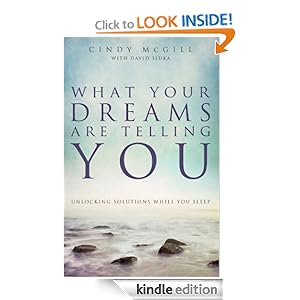
Review: What Your Dreams Are Telling You by Cindy McGill


Cindy McGill's book "What Your Dreams Are Telling You," is obviously written to Christian believers and to non-believers, to those who already believe dreams are the language of the soul and to those who are not quite sure. As such, it does as good a job as could be expected for a book that aims to speak to such disparate types of possible readers.

The Hebrew mind, as shown in the Bible, valued dreams. The apostles and the gospel writers also found value, insight, guidance, and prophetic help in dreams.But in the ages after the gospels were written, the church age incorporated the rationalistic values of Aristotle, the specialization of the clergy as the only ones to whom God talks to, and the fear of the supernatural. Thus dreams were either ridiculed, viewed with superstition, or dismissed.

Over the centuries, many books written on how to interpret one's dream or the dreams of others. Some of these books taught dreamers to interpret their dreams with rigid universal and questionable symptoms. This book, however, is not one of those. While it allows for certain universal symbols, it is actually a manual that shows readers how to understand and encounter a dream. So there are common dream themes, but there are also steps and teaching about how to discover the messages in one's dreams.

The book is immensely readable but there are moments when the writer is like a calculus teacher teaching basic math -- McGill often doesn't delve into the process as slowly as she might. There are dreams whose interpretations are given but not thoroughly explained, and there are examples of Biblical and historical dreams that have appeared in other dream interpretation books. It's a hard row to walk, not speaking down to the knowledgeable reader while teaching the new learner. For the most part however, she succeeds.
Recommended.


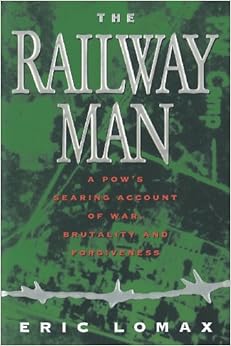
Review: The Railway Man


  • Paperback: 292 pages
  • Publisher: W. W. Norton & Company (June 1, 2008)
  • Language: English
  • ISBN-10: 0393334988
  • ISBN-13: 978-0393334982

  • Book blurb: Here is a remarkable true story of forgiveness--a tremendous testament to the courage that propels one toward remembrance, and finally, peace with the past. A classic war autobiography, The Railway Man is a powerful tale of survival and of the human capacity to understand even those who have done us unthinkable harm.


    The Railway Man is Eric Lomax's memoir of growing up as a lover of trains, railroads and steam engines. It also tells of his imprisonment and later being in a camp.

    First off: This is not a remarkable story of forgiveness. The forgiveness takes place within the last twenty pages of the novel. In addition, the villain -- such as he is-- does not show up until late in the novel. In fact, there really isn't much shown about individual Japanese captors. So if readers expect to see a long series of show-downs between the narrator and any individual Japanese prison guard, it's best to cast that expectation aside. The blurb --about forgiveness, etc-- is misleading. True, the narrator forgives a Japanese prison guard and understands why forgiveness is a healing thing but honestly that Japanese guard hardly matters.

    Secondly: The book is not called "The Railway Man" for no reason. This book is about railways. About an only child's obsession with railways, about a teenaged kid's obsession with trains and engineering and how he and his fellow prisoners of war also ended up being trapped into working on the Japanese dream of a railroad. Again, the blurb hints at heart issues and even of spiritual memoirs. But the book is different. I did perk up when he talked about the self-righteous cultic petty evangelical Baptist Church he got pulled into. But then he didn't talk about it as much as he should have.

    Thirdly: The book is well-written.  Anyone who has ever had a repressed emotion --caused by unspeakable suffering and who has had that unspeakable suffering destroy his marriage should read this book. The sections on the destruction of his long marriage was wonderful. He married a girl he didn't know, one he had become engaged to before the way, but had to leave because of the war. They endured a painful non-communicative marriage because he kept his painful war experiences to himself. But he called her S in the narrative? Who does that? Even for privacy sake? Heck he spent about forty years with the woman! But the emotion in the book is so restrained -- even though the book is supposed to be about the narrator finally telling his heart. Emotion and human connectedness comes too little and too late in a novel where the passion of the author is for railways. And wow, all that passion! I'm easygoing but even I -- who prides herself on being a patient reader of things quirky, passionatem, and obsessional-- found myself skimming. I've read books on rubber, eels, etc. But there was always something that kept me enthralled. I don't know why I wasn't enthralled in this book. It's probably entirely my fault because other people have liked this book. I'm not saying it is a bad book. It isn't. There are some wonderful sections of railway history and British WWII POW history. But somehow...I started skimming around the last third of the book. I was looking for something I didn't or couldn't find.


    Saturday, April 19, 2014

    Review: Mastermind: How to Think Like Sherlock Holme


    Mastermind: How to Think Like Sherlock Holmes
    Maria Konnikova
    ISBN 978-0-14-312434-4
    US $16.00
    CAN $18.00
    Penguin

    Mastermind is psychological self-help book, a study of the mechanics of thinking, and a literary tour of the stories about Sherlock Holmes. Primarily, it is a book on aspects of mindfulness. Sherlock Holmes is a literary character who is well-known in detective culture and he is always praised for his skills at “noticing everything” and “deductive reasoning.” Konnikova shows, however, that those skills do not fully describe Arthur Conan Doyle’s character. In fact thenway Sherlock is described is often reductivist because those who suppose they understand Holmes are often not really understanding the very character they praise. Using scenes from the stories, Konnnikova shows the reader that thinking like Sherlock Holmes requires a much more complicated mental training and awareness. It is not that Sherlock Holmes notices everything but that he understands the importance of what he notices and understands where he has shelved it in his mind.

    This book is essentially about gaining insight into how to renew one’s mind by understanding how cultural baggage, personal history and the biological neuroscience of the brain works -- sometimes detrimentally-- to mindfulness.

    To explain the art of thinking, Konnikova uses the metaphor of the mind as an attic in which memories are filed away. The metaphor works well. The reader will readily understand that attics contain important and less important memories and that some places in the attic are more accessible than others. There is also the problem of remembering where one has placed certain items -- memory retrieval. But there is much more to learning how to think than how one deals with memories. There is encoding, overconfidence, mindful distraction, the inner storyteller, distancing, probability, appropriateness, adaptability, and observation among other aspects.

    Konnikova has written a witty conversational book that explains the mind. It is conversational and accessible but it is not an easy self-help read. There are mental strategies some readers might not wish to try -- for cultural or personal reasons-- and there is the central issue of Sherlock Holmes. Although Sherlock is everywhere in western culture, some readers may not have read the Conan Doyle stories referenced in these pages. They might find the book is not what they expected or they might think the quotations amount to literary analysis. Yet, although the book references and discusses Sherlock Holmes, it can be a good read if a reader is willing. This book would be a good addition to psychology, creative writing, or criminology courses. It is also a good read for those who love Sherlock Holmes or who wish to understand how the brain works.

    Highly recommended.

    Wednesday, April 16, 2014

    Review: Unseen by Jack Graham


    Unseen, a nonfiction book written by Jack Graham, the internationally known televangelist is a book that shows the Christian Worldview. The Bible declares that God's ways are not like human ways. This, the book concerns itself with showing the ways of God to man, and in showing Christians how Christians believe the world operates.

    It's a perfect book for new Christians or non-Christians. Its doctrine is mainstream, correct, and accessible to all. Most mainstream denominations --with the exception of Mormons and Jehovah's Witnesses-- will agree to all its tenets. Roman Catholics might quibble because such Catholic elements such as Purgatory and The Virgin Mary as co-redemptrix are not included. But, for the most part, the book shows the shared theologies of Christianity -- the belief in one invisible God who is uncaused and who caused all things, who works in and with humanity, whose Spirit collaborated with frail holy humans to create the Bible, and who sent his only perfect Son, Jesus Christ to reconcile mankind to God.

    The book tells about Angels, Heaven, Hell, and the power of God. It is a good book, well written but also, curiously, "unnecessary" or even "old." It says nothing new. Neither does it say the old truths in a new way. Often many Christians do not read old Christian writers so perhaps it is a good thing for Christians to write a new book every few years to explain theology to new Christians. But for believers who have read their Bibles, there really is nothing new written in or spoken of or seen in Unseen...and the sections where one reads about the Christian view of salvation through Christ does make the reader wonder whom this book is written for.

    Yet it is a good book and will no doubt bless many. I recommend this book.


    Saturday, April 12, 2014

    Review: The Hen Who Dreamed She Could Fly

    The Hen Who Dreamed She Could Fly
    by Sun-Mi Hwang
    Penguin
    $15.00 US, $16.00 CAN, ISBN: 978-0-14-312320-0, 134 pages

    It is no wonder the book The Hen Who Dreamed She Could Fly became an instant Korean classic and decade-long bestseller when it was first published in 2000.It is philosophical without being preachy, heartfelt without being maudlin or sentimental, challenging without being arrogant or insulting.

    Its 133 pages has a simple plot: Sprout, an egg-laying hen cooped up and past her prime — and suffering from an existential depression because of her childlessness– longs to have a child. It is an improbable wish, of course. Sprout is caged and only one rooster resides on the farm, a rooster who is happily mated. But wishes often come true if fate and a strong will are present.

    After a series of life-threatening incidents brought about by the humans and animals on the farm’s pecking-order, Sprout becomes a mother. But even then, she has emotional and natural challenges to contend with.

    The heroine (who has no name but the name she gives herself) could be a protagonist in a story on slavery, status and restrictions, infertility, adoption, cross-cultural families, committing to a dream, or even animal rights. But while all these are present, the story is much more than all these. That is the power of a fable.

    As is also common in a fable, the vocabulary is accessible and the story is universal. The setting is a farm but not specifically a Korean farm. Although the story is about an isolated female and her wish for even one child, it can speak to old and young and to anyone who has ever longed to do what he thinks he/she was born to do. The story is about greatness of soul, perseverance, parental sacrifice, belonging and purpose. And it is also about fulfillment and accomplishing a dream in spite of the odds.

    The line-drawing illustrations give the book a childlike feel but the story itself has such strong imagery, children will be able to “see” the story unfold before their eyes. However like all great children books — Charlotte’s Web, for instance– this novel transcends its genre. Highly, highly recommended.

    Saturday, April 05, 2014

    Review: Moving Your invisible Boundaries: Heart Physics: The Key to Limitless Living


    Many Christian books are written about trusting God and His promises. These are God centered and their purpose is to tell the Christian that God is worthy of trust. There are also self-help Christian books which are concerned with behavior modification and helping the Christian to change. This book concerns itself with the human heart, the place where God's promises must rest and the place in which God's grace engenders change.
    It is about understanding what has affected one's heart and prevented God's spirit and God's words from changing the believer.

    The Bible often writes about the heart, stating in many verses that human life comes from the heart. In the book of proverbs, the reader is told, "Guard your heart with all diligence for out of it comes the issues of life." In addition, Scripture often uses the idea of the fallow ground as a symbol of the heart, and seeds as God's word in the heart. The parable of the Sower in the New Testament is one such example, and the parable in Isaiah 28:23-29

    However, legalism as well as humanity's fear of God and habit of trusting its own righteousness has affected the power of God's words and God's grace. This book is a manual on how to recognize and allow God to remove the images and emotional pains that have affected one's heart. In so doing, the seed of God's word is enabled to move freely in one's life.

    This is not a new teaching but it is an indepth one that needs to be taught in every generation in the language of all generations. Many theologians --for instance the 19th century pastor William Griffith Thomas in his book, The Prayers of St Paul-- have spoken about loving God, accepting God's righteousness, and about faith in the heart. I feel the need to mention this because many Christians will assume this is a new-fangled teaching and sometimes one has to show that a teaching has been around for a long time and is truly Scriptural.

    Although this book is clear and Biblical, it is a book that has to be read rather than described because many Christians will hear certain words and immediately think they understand the book. This is a book that truly describes the gospel.
    Highly recommended. 

    Wednesday, March 26, 2014

    Review: And There was Light


    And there was Light
    Jacques Lusseyran
    New World Library
    ISBN 978-60868-269-0


    Some books should not be read with other books. Or the other book will not compare favorably. Some books remind the reader of why books are read in the first place  - because they open the eyes and heart to new worlds that the reader had never dreamed of. Some books remove the cap from our head, and open the top of our skulls. “And There was Light” is such a book -- at least in the first section. But for some, it might be the second section. It depends.

    This is because “And There was Light”  is divided into three sections. This is a subtle division, of course, because one’s life is generally not laid out in clearly demarcated lines. But the autobiographical relating of Jacques Lusseyran’s life does fall neatly into three sections.

    The first is about his blindness, the second about his work in the Resistance, the third about his time in a prison camp and release. A book with three such disparate sections will elicit different reactions depending on the writer’s heart and interests. The first, about the author’s blindness and subsequent discovery of a different way of seeing, is spiritual, philosophical, almost rhapsodic in its depiction of the greater inner light that guided him and helped him to see. The almost mystical feel of the narrative would affirm truth to those who are acquainted with the magical in life. It is energizing, amazing, spiritual truth, yet to the more rigid-minded whose ideas of life are rooted in mundane ideas of how the world “really operates” this section might seem poetic at best and deluded at worst.

    The second section -- that in which Lusseyran describes the work of the Resistance and his part in it-- reads at first like a story about young boys pretending to be important. This is true especially if the reader does not understand the work of the French Resistance during the Nazi Occupation. But as one reads -- and puts aside the idea that these young teenagers are merely playing at war-- one sees the importance of the work they carried out. Those who live in countries which have never known life under the occupation of a foreign power will begin to understand the great work of the French Resistance.  Lovers of war history will like this and the last section although some readers may be hard put to make it through the first section.

    The third section details the author’s imprisonment. Throughout the book, the author is of course blind. But he is not imprisoned by his blindness. His blindness does not shrink his life or impinge on him but turns out to be freeing. Still there were moments when blindness affected his optimism. The first was when the fascist Vichy government declared that blind people could not teach. The second was when he was imprisoned. But none of these challenges affected Lusseyran’s natural optimism, an optimism which was based on his trust in God’s love and pity.

    One of the most harrowing experiences in the book concerns the author’s meeting with a blind despondent child whose parents had not understood the different way of “seeing” and had effectively shut down the emergence of the child’s other senses. Seeing the child, Lusseyran is horrified at what his own life had been if his parents had not challenged the accepted norms of educating the blind or the accepted human idea of physical reality.

    Spiritual books open the world of spirit to  those who are willing to see it. The world of spirit is readily understood by those whose minds are rooted in the earthly way of seeing. When Lusseyran speaks of living light, or the morality of sound, some Christians and New Agers may understand. Those who understand Quantum Physics might understand. But others might be skeptical, confused, or dumfounded. No matter. Lovers of memoir will find the entire narrative majestic and heroic. The author speaks of the great things he did and yet the story is humble. The humility stems from his love of God, his adoration of his parents, and his admiration of his friends. The memoir has the feel of a classic, which it is ...being named as one of the top 100 Christian books of the 20th century. Powerful insightful commentary and insights stream across the narrative beautifully, effortlessly, and casually. Yet the verbal stylings are so joyful and rhapsodic that they echo older classic writings.  

    This book is highly recommended, especially for those who feel they need the need to have their mind renewed, to those who work with or are disabled, to those with a spiritual bent, and to history buffs.

    Saturday, March 22, 2014

    Review: Miracles by Tim Stafford


    A book is like a horse one hitches one's wagon to. In order to enjoy it, one has to totally trust in that horse. By the time I reached page 199 of Tim Stafford's Miracles, I wanted to unhitch my wagon. Miracles is the kind of book that talks about Miracles yet uses "only those Biblical passages everyone reads" one would expect from a Senior Writer for Christianity Today, has written a book about miracles.

    Although Stafford writes as one who is a "journalist" he doesn't include much of the primary document -- The Bible. He certainly doesn't include those verses that might challenge his take. This is what is bothersome: an author thinking he is being fair when he is biased, at worse or Biblically-ignorant at best.

    Stafford is trying to be honest.
    A good
    thing, because many Christian books often strike some readers as dishonest for various reasons. So, honesty in a book about skepticism and faith, is to be lauded. But when an author writes a book on healing that focuses more on human experience, denominationalism, and human reasoning without adequately balancing it with the Bible, then iffy human-experience-based theology is what results. Not that Christians should go about not using their minds, but God's ways -- and His Mind-- are higher than mere human minds, observations, and conclusions. Jesus warned his disciple Peter about looking at John's life. Paul warns his readers to  look to Jesus and to the Scriptures as well. The experience of human life is not to be the basis for any theology and the "this is what I have seen and understood about miracles" ways of discussing theology is problematical at best.

    Paul has many letters in his epistles, many of which are prayers that the readers (or hearers) in the churches have wisdom and revelation. Tim Stafford should have prayed those prayers prayerfully before he wrote this book.

    There are many things wrong with this book. But I will only state a few.

    On page 199, he writes: "God is the master of everything that happens." One is tempted to ask: "WHAT?" John the Evangelist writes that "we know all the world is under the power of the evil one." But Stafford seems to believe the popular cultural sayings "There's a reason for everything" or "God's in charge of everything" or "God is sovereign."  Not that we should blame everything on the devil but many things are not under God's control: human sin, human doubt, human actions being just a few.

    Admittedly, this is what most people believe, but that a journalist would state such an untheological common truism shows a Calvinist bias.

    There are other aspects of healing which he could have discussed.

    One of the largest fallacy in the book is the false dichotomy it presents between "human faith versus God's sovereign will." By setting up this dichotomy, God is made to seem "mysterious" (allowing people to be afflicted for some great unknown good.) Thus Christians who believe God desires healing in all things are made to appear as if they are blaming innocent sick people for lack of faith. Not that miracles come by human work alone. In the Bible miracles comes by love, by faith, by community, by persevereance, by repentance, by know-how. And sometimes it comes by God's sovereign will. But John states that God is light and in Him is no confusion at all.

    There are also questionable assumptions. Stafford states, "The Bible doesn't tell how to do miracles." But Jesus taught the disciples --even Judas Iscariot-- how to heal the sick and cast out devils. Peter and John healed the blind man by saying, "Such as I have I give you." The Great Commission seems to imply that all Christians have the power to heal the sick when the gospel --not legalism-- is being preached. From what I see Jesus told people to command if they believe. Plain and simple. This book subtly blames God by calling God mysterious. It never says -- as far as I can see-- that the church needs to understand more about healing or that the church is simply not doing things the way God told us to. After all, few Christians actually pray for the sick the way God has told us to pray.

    Stafford also doesn't address the possibility that human illness is often the battleground of the cosmological war between God and the devil, and that miracles are a sign that Jesus has conquered evil and has commanded His church to continue to prove His victory. Stafford doesn't mention the devil at all. Jesus said, "The devil comes to kill, steal, and destroy. I came that you might have life." Jesus stated, "The Prince of this world is judged." If the darkness is past and the true light shines, the kingdom of God is still against sickness.
    But most importantly, He creates a God who is vastly different from Jesus. While Jesus healed all who came to Him --and a few who didn't-- the God Stafford creates is mysterious and unpredictable. An easy answer to a predicament, and the easy answer for Christian believer-skeptics. It would be much more difficult to say God is generally predictable but I have not researched this matter enough to understand why miracles don't happen more consistently.

    It is best to read books that promote a faith rather than those which engender confusion under the guise of journalism. And it is best to read one's Bible and ask for Holy Spirit wisdom to understand than to lean on one's own understanding and experience.  Jesuc Christ warned His followers to take heed how they hear.

    Unfortunately, Stafford has not researched modern healing miracles as much as he should have and the examples he gives mostly fall into a certain camp of Pentecostalism. For those needing to build their faith, reading this book is like finding someone has poisoned one's Gatorade during a race. Not recommended. Better books than Miracles have been written. A J Gordon's The Ministry of Healing for instance is much more comprehensive about church history, the Bible, the missionary field, etc. (Here is Gordon's on Amazon.)  Also, Divine Healing by Andrew Murray, and The Gospel of Healing by A.B. Simpson. These are old books, written by true researchers whose insight were helped by the Holy Spirit. While Stafford wanted to write of his own experiences, somewhere along the line distinctions got blurred. The book stops being about his experience and his own spiritual journey and becomes a  "This is what I have seen therefore this is what is true because I am a journalist and I know what's true" treatise. Unfortunate because other books about miracles have been written by Christian nurses and doctors, people who see God's miracles daily. Stafford should have read those books before venturing into his own pitiful entry.

    Blog Archive